
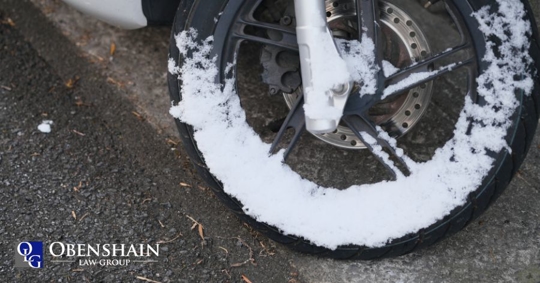
For many riders across Virginia, the urge to keep riding doesn't stop just because the calendar hits December. While the freedom of the open road is appealing year-round, winter introduces a unique set of hazards that dramatically increase the risk of a motorcycle accident. Remember that there are severe consequences and critical dangers that every rider must recognize when the temperature drops.
The Invisible Threat: Reduced Tire Traction
The most profound danger in cold weather relates to your tires. Motorcycles rely entirely on their tires' contact patch—the small area touching the road—for stability, steering, and braking.
Tire Compound: Most motorcycle tires are optimized for warm weather. As temperatures drop below 45°F (7°C), the rubber compound becomes noticeably harder and less flexible. This stiffening drastically reduces grip and traction, especially when cornering or performing emergency maneuvers.
"Black Ice" and Frost: Virginia’s roads are notorious for frost and black ice, particularly on bridges, overpasses, and shaded areas. Unlike cars, a motorcycle offers no forgiveness for hitting these slick patches. A sudden, unexpected loss of traction is often fatal to stability.
Reduced Rider Performance and Hypothermia
Cold weather doesn't just affect the bike; it severely impairs the rider. Operating a motorcycle is a physically and mentally demanding task that requires split-second reactions.
Numbness and Reaction Time: Exposure to cold air, even with proper gear, can cause hands and feet to become numb. This slows your reaction time on crucial controls like the clutch, brakes, and throttle. A delay of even a fraction of a second can be the difference between a safe stop and a collision.
Hypothermia and Fatigue: Extended exposure to low temperatures can lead to hypothermia, which causes confusion, impaired judgment, and extreme fatigue. A rider whose judgment is compromised is a high risk to themselves and others.
The State of the Virginia Roadway
Winter weather fundamentally changes the quality and predictability of Virginia's roads:
Salt and Sand Deposits: Road maintenance crews use salt, sand, and other treatments to manage ice. While necessary, these treatments leave behind grit and debris that significantly reduce tire grip, especially when collected in corners.
Potholes and Cracks: The freeze-thaw cycle of winter is brutal on asphalt. Water seeps into cracks, freezes, expands, and creates dangerous potholes that can easily destabilize a motorcycle and cause a low-side accident.
Low Visibility: Shorter daylight hours, combined with fog, rain, or sleet, mean riders spend more time in low-visibility conditions. A motorcyclist is already inherently less visible; winter compounds this challenge exponentially.
Talk to Our Harrisonburg Motorcycle Accident Lawyers
Riding in the winter requires a sober appreciation of these heightened risks. It demands excellent cold-weather gear, reduced speeds, and an increased following distance.
Should you or a loved one suffer a motorcycle accident due to a driver’s negligence, ice-related loss of control, or other unforeseen hazards this winter, Obenshain Law Group is here. We handle complex accident cases and ensure riders' rights are protected.
For authoritative, empathetic counsel, contact us for a confidential consultation at (540) 318-7360.